From September 15 to 17, Dermochimica will be a key exhibitor at SIMAC Tanning Tech 2026 in Milan Rho, a global hub for cutting-edge technologies in the leather and footwear supply chain.
Over the decades, the fair has evolved significantly. In the 1980s, management shifted to Assomac, and since 1988, SIMAC has been held alongside Lineapelle, strengthening the vital connection between technology and materials in the fashion industry.
This strategic partnership remains a cornerstone of the event, aiming to highlight the entire fashion value chain by linking innovation, material quality, and global competitiveness.
The 2026 edition will spotlight critical themes such as environmental sustainability, artificial intelligence, and skills development for Industry 5.0, reflecting the priorities shaping the sector’s future.
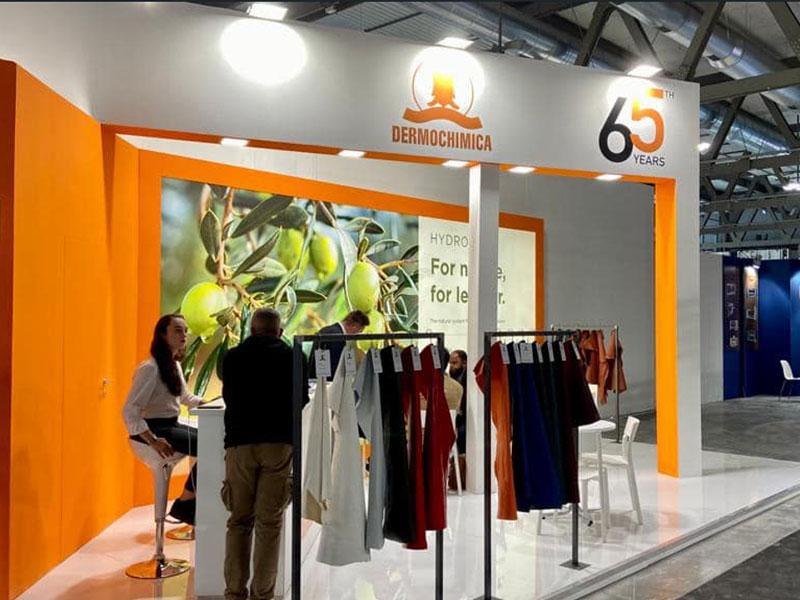
Dermochimica’s presence will showcase its latest technological solutions and innovations for leather processing. Visitors to the company’s stand will meet expert staff and explore new products and advancements firsthand.
SIMAC Tanning Tech continues to serve as a premier platform connecting research, industry, and market players, uniting international professionals and generating fresh opportunities across the sector.
The event will take place in Milan from September 15 to 17, 2026, where professionals and companies will be able to discuss the future challenges of the leather-fashion supply chain and be won over once again by the excellence of this material.
The fair’s motto, “Come fall in love with leather,” invites attendees to discover the innovations that will define the future of leather production.
Leather tanned in Italy also guarantees very high safety standards for the final consumer. The use of chemicals is regulated by strict European legislation, such as the REACH and POP regulations, but the sector often goes beyond legal requirements. Companies carry out additional checks on finished products to ensure correct chemical management throughout the production process.
Collaboration with major fashion houses, often pursuing standards even stricter than regulations, has further driven technological investments and greater attention across the entire supply chain. Key topics include animal welfare and raw material traceability, increasingly central to the global market.
Workplace safety is another important focus. According to the latest available data, the incidence of accidents in Italian tanneries is 26.1 per 1,000 employees, a 43% reduction compared to fifteen years ago, with an overall decline in incidents of 56%.
A key role in this area is played by ICEC – Institute for the Certification of Tannery Quality, which over the last twenty-five years has developed numerous standards and certifications covering environmental, social, ethical, and economic aspects of production. Today, more than 50% of the sector’s turnover comes from companies holding at least one ICEC certification.
The circular nature of leather is also evident in the recovery of tannery process by-products. Sludges, trimmings, shavings, and other residues are transformed into new raw materials for other industries. From these materials, fertilizers and biostimulants for agriculture, gelatin and collagen for the food industry, and granules and composites for construction are produced.
Thanks to this integrated approach, leather stands as a concrete example of circular economy applied to industry. The Italian tanning sector continues to be a global reference point for international supply chains in footwear, leather goods, clothing, furniture, and automotive industries.